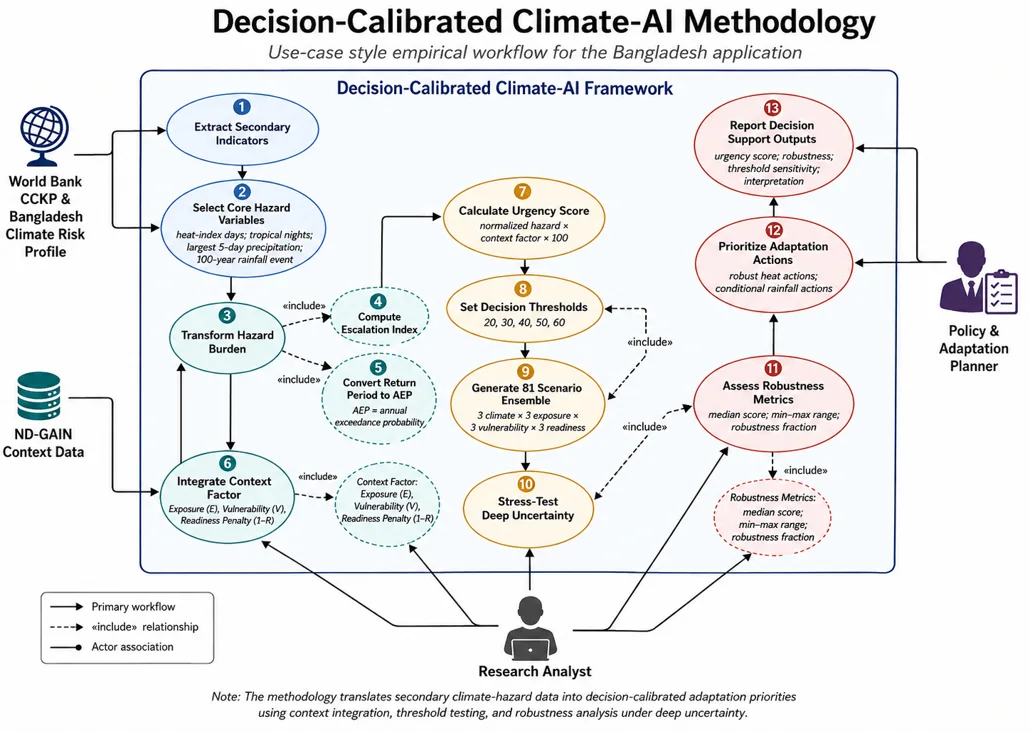
Artificial-intelligence weather and climate systems increasingly improve forecast speed and skill, but adaptation value depends on whether forecast information is reliable near decision thresholds, interpreted through vulnerability and institutional capacity, and robust to futures that cannot be assigned precise probabilities. This study develops a decision-calibrated climate-AI (DCCA) framework and demonstrates its decision layer for Bangladesh using published secondary indicators from the Worl
Climate Adaptation and Artificial IntelligenceView Abstract →
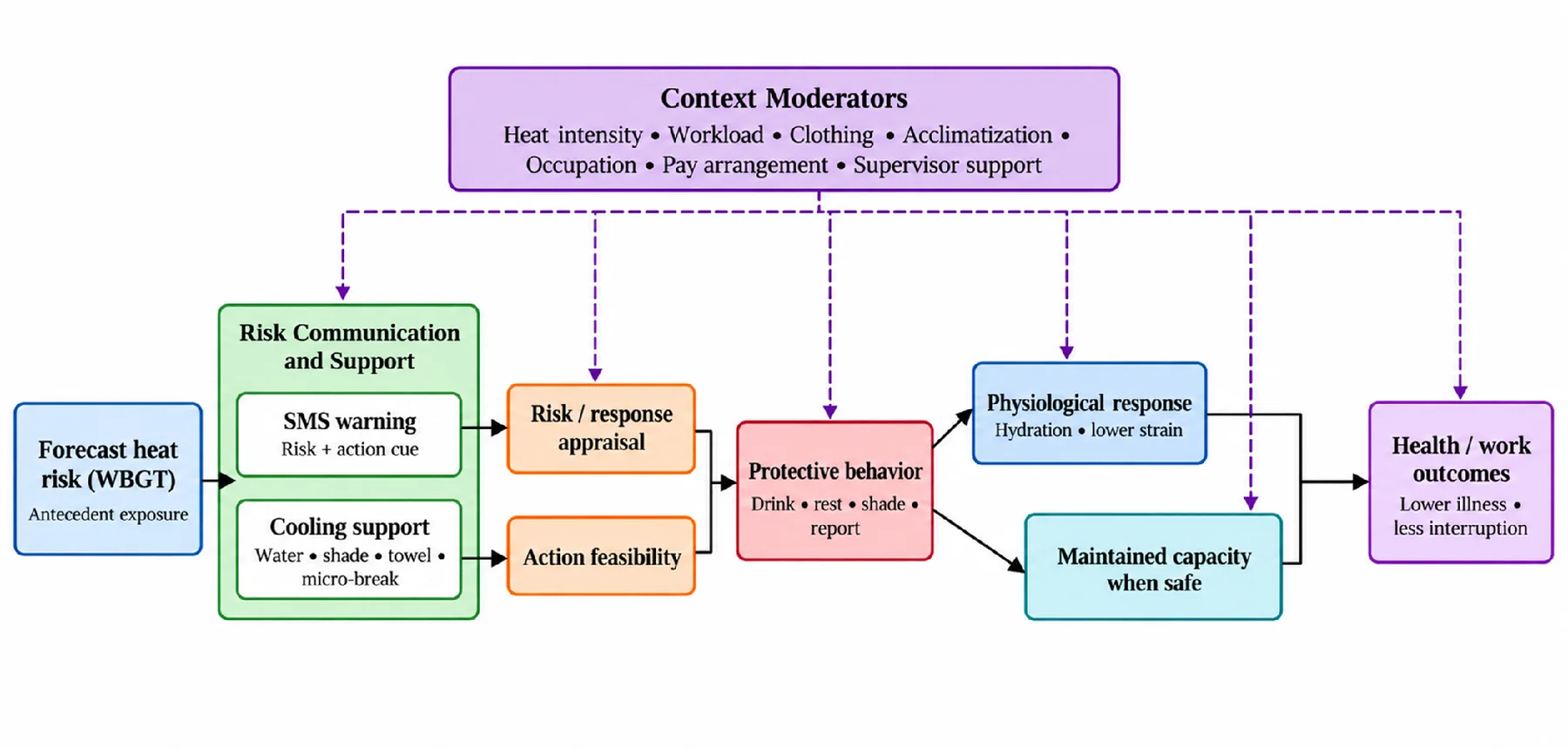
Outdoor workers are at risk of extreme heat due to physiological strain, dehydration, injury, and loss of productivity, and warning systems can deliver information without diminishing the practical challenges to taking protective action. This protocol compares the effectiveness of forecast-triggered SMS warnings, low-cost cooling support, and a combination of both to decrease heat-related morbidity among urban outdoor workers in Dhaka, Bangladesh. The study will include about 1,080 workers in a
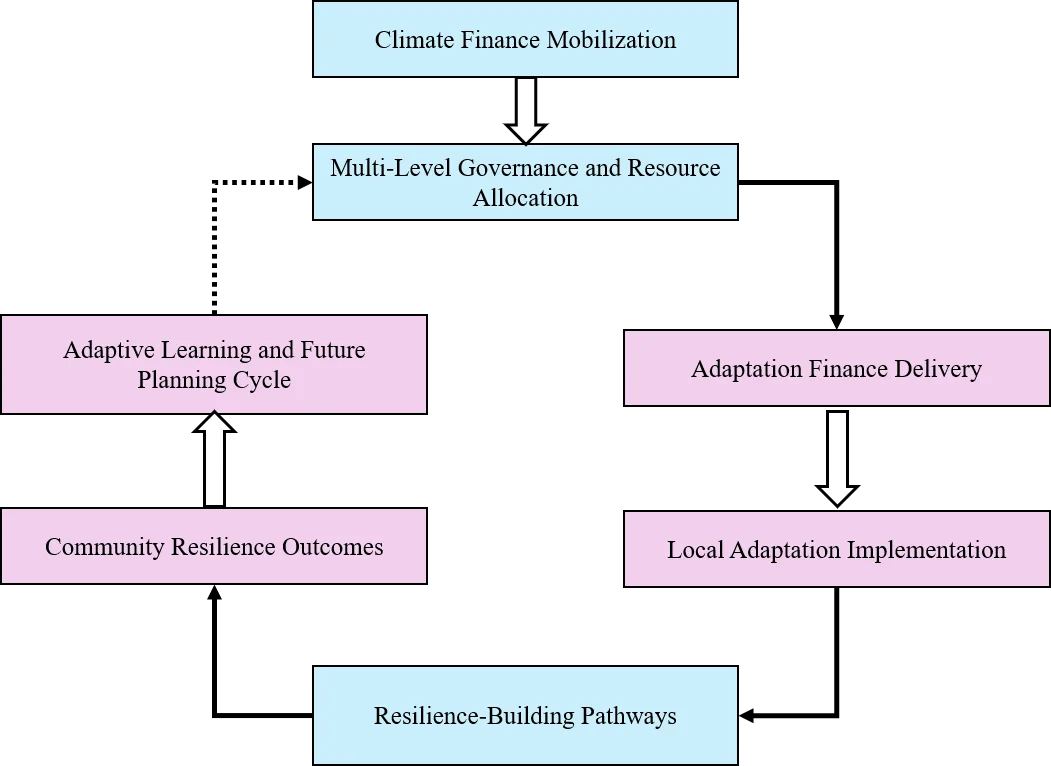
Bangladesh is vulnerable to recurrent floods, cyclones, salinity intrusion, river erosion and livelihood disruption, but the adaptation finance is not consolidated. The local adaptation finance is fragmented among institutions and funding channels in the context of recurrent floods, cyclones, salinity intrusion, river erosion and livelihood disruption in Bangladesh. This study examines the relationship between the concepts of public grants, local co-financing, multi-level governance and househol